
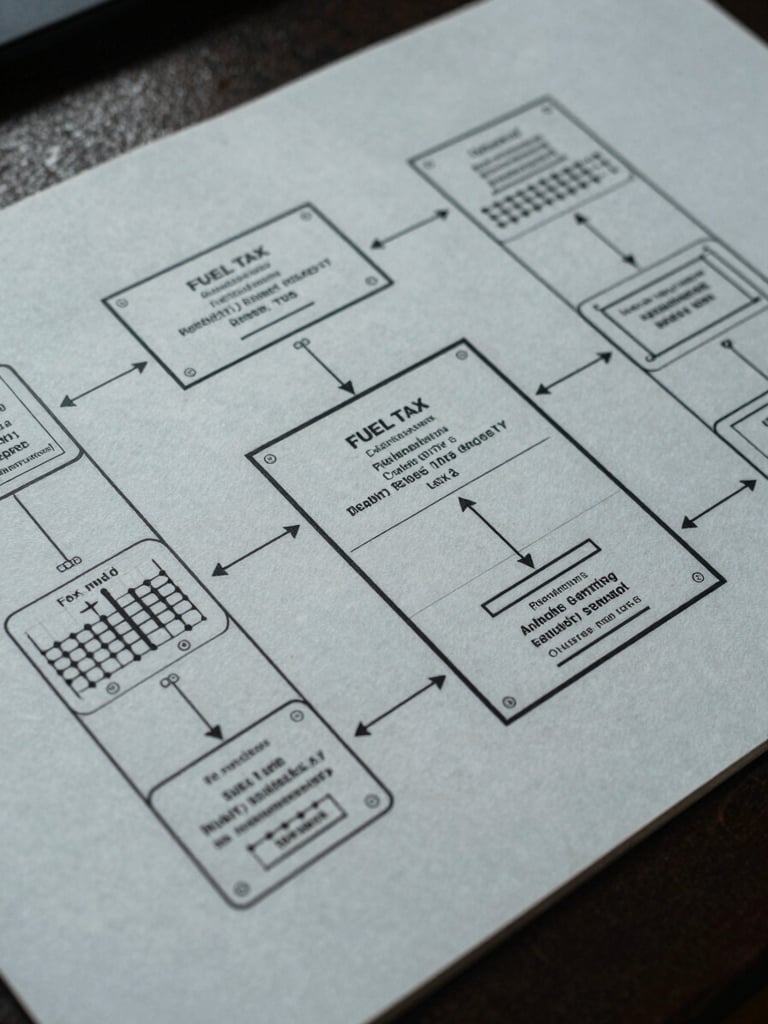
Overhead wide-format view of a system architecture diagram on matte paper, domain boundary lines clearly delineating a fuel-tax module from adjacent regulatory zones, cool studio lighting, precise ink annotations, blueprint aesthetic
— Fuel Verify Module

Fuel-tax verification in its own domain

Fuel Verify runs in a dedicated tenant module. Hazmat classifications, tax rules from adjacent domains, and unrelated RBAC matrices never enter the fuel-tax engine.


Extreme close-up of modular server infrastructure, segmented cable management trays color-coded by zone, cool north-facing daylight from the left, sharp focus on physical separation boundaries between compartments, blueprint-precision aesthetic
/ Architectural enforcement

Module boundaries enforced at infrastructure

Cross-domain bleed is not a policy setting—it is architecturally impossible. The Fuel Verify boundary is enforced at the infrastructure layer, not the application layer.

Each tenant module carries its own audit trail, RBAC matrix, and reporting surface. No shared state crosses the module wall.

Jurisdiction-ready outputs

Reporting surfaces built for regulators, not reconciliation

Domain-specific reporting surfaces in Fuel Verify generate jurisdiction-ready outputs directly from the module's isolated data layer. Manual reconciliation across tools is structurally eliminated.